SAFR Guard Privacy Center
Protecting workers and stores without compromising shopper privacy.
SAFR Guard is designed to help retailers address safety and security concerns while minimizing the collection, use, and retention of information about everyday shoppers.
Minimize Data.
Limit its Use.
Prevent Misuse.
Keep it Secure.
Be Transparent.

Protecting workers and stores without compromising shopper privacy.
SAFR Guard is designed to help retailers address safety and security concerns while minimizing the collection, use, and retention of information about everyday shoppers.
Minimize Data.
Limit its Use.
Prevent Misuse.
Keep it Secure.
Be Transparent.
SAFR Guard Privacy Principles
Minimize Data.
We don’t keep biometric data about everyday shoppers.Minimize Data.
If there is no match to a repeat offender enrolled by the retailer, the biometric data used for matching is deleted immediately. It isn’t added to a database. Normal CCTV footage is kept for 30 days, following industry standard.
Limit its use.
SAFR Guard has one purpose: store safety and security.Limit its use.
SAFR Guard is designed to help retailers recognize repeat offenders and respond to safety and security concerns. Shopper data isn’t used for advertising, marketing, or to train AI models.
Prevent Misuse.
Technology this powerful requires oversight. We provide it.Prevent Misuse.
SAFR Guard includes human oversight and controls to prevent misuse. Enrollments must be tied to verified security incidents and are reviewed by trained personnel.
Keep it Secure.
Access to data is controlled and protected.Keep it Secure.
SAFR Guard uses encryption, role-based access, audit logging, and continuous monitoring to protect data and limit access to authorized users. SAFR is also ISO 27001 certified.
Be transparent.
Shoppers should know when face matching is being used.Be transparent.
Stores using SAFR Guard are required to display signage and make privacy information available so shoppers can understand how the technology is being used.
What happens during face matching?
SAFR Guard compares a face at the store entrance with people on the store security list. What happens next depends on whether there is a potential match.
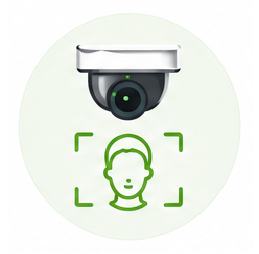
Face matching occurs.
The camera compares a face at the store entrance against repeat offenders on the store security list.
What SAFR Guard Doesn’t Do