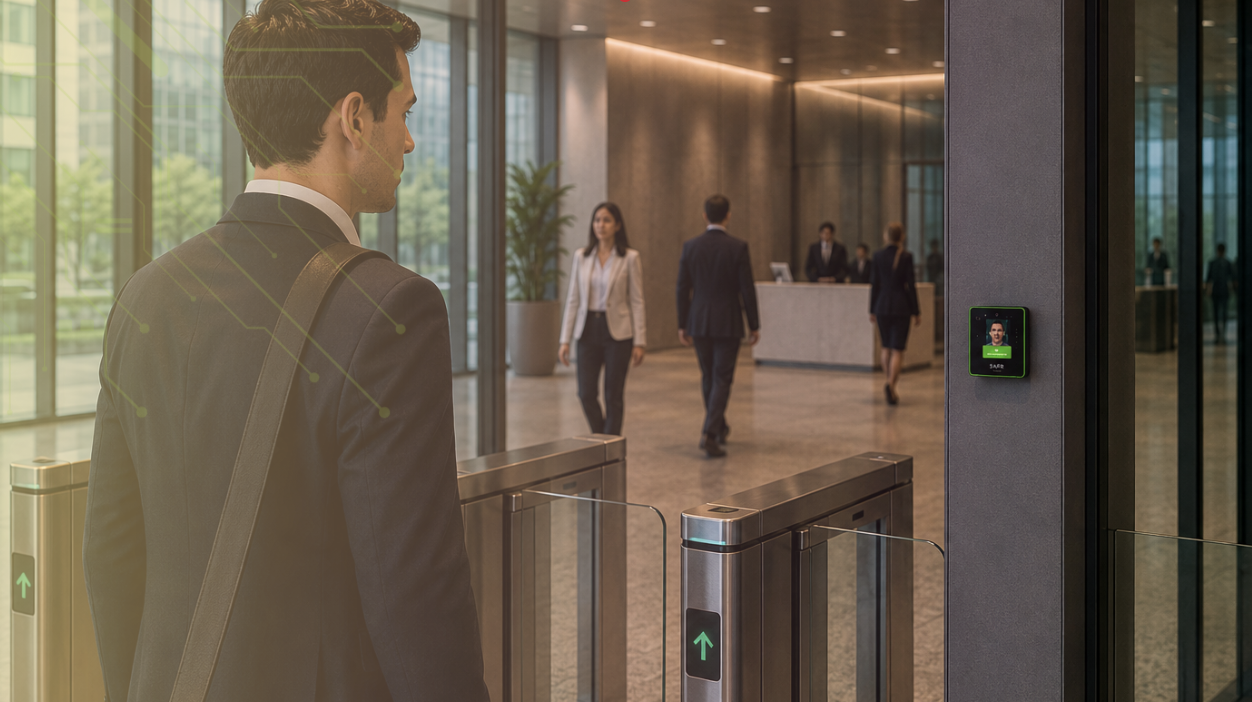
Privacy-First Facial Authentication
At SAFR, we believe security should never force a choice between powerful and private. SAFR SCAN is engineered to deliver both: accurate, fast face authentication that keeps your biometric data protected, every time.
Privacy-First Facial Authentication
At SAFR, we believe security should never force a choice between powerful and private. SAFR SCAN is engineered to deliver both: accurate, fast face authentication that keeps your biometric data protected, every time.
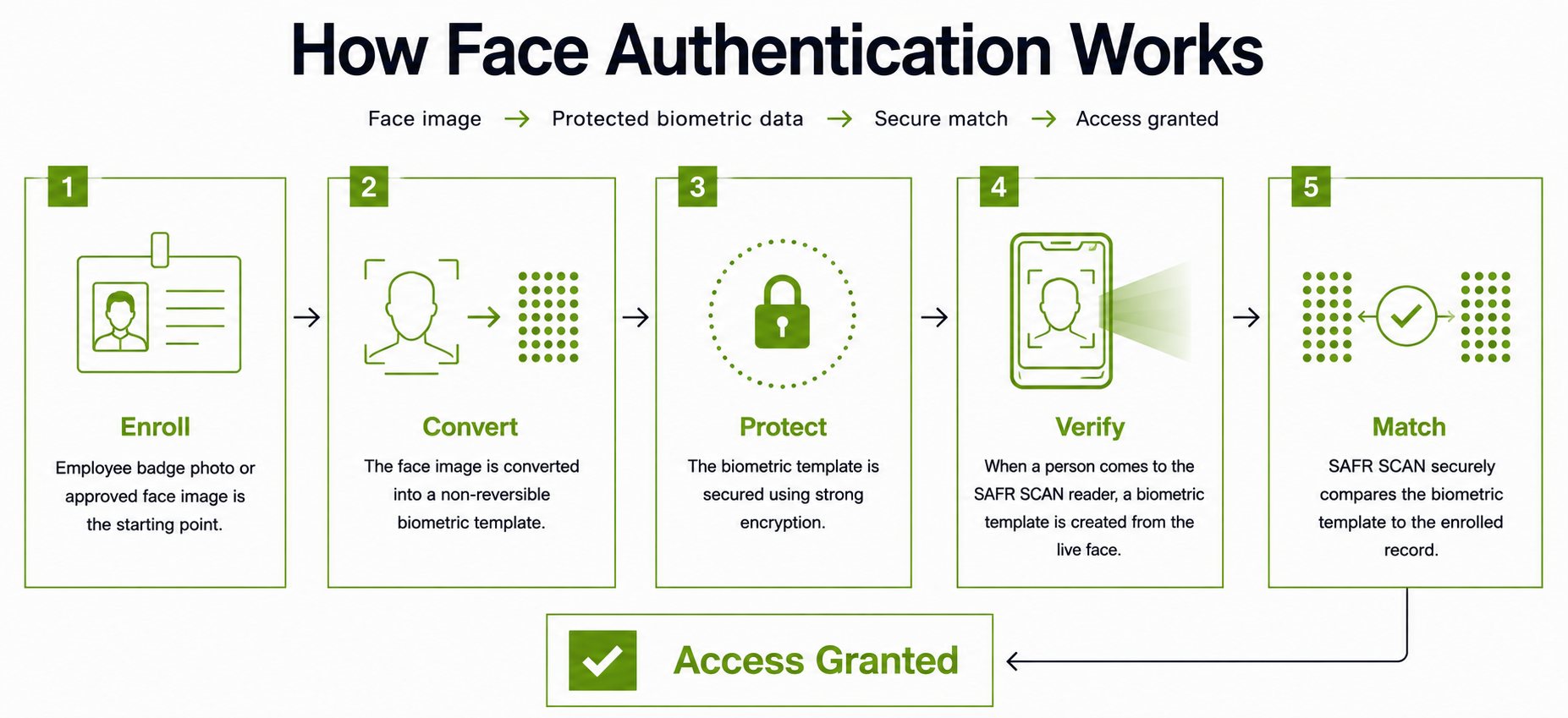
Privacy By Design
Privacy By Design
Your Biometrics.
Your Control.
Your biometric template belongs to you. SAFR SCAN supports approaches that give users control over where their template is stored, when it is presented, and how it is used for authentication.
Biometrics
on Mobile
Biometrics on Mobile stores the biometric template on the user’s smartphone, giving the user control and avoiding the need for a centralized biometric template database.
- User-Controlled Credential
- No Centralized Biometric Database
- Consent Built Into Enrollment
- Secure Bluetooth + Zero Trust


Biometrics
on Card
Biometrics on card stores the encrypted biometric template on a smart card physically held by the user. It can support offline 1:1 authentication.
- User in Total Control
- No Centralized Database Required
- Zero Trust Architecture
-
Works Completely Offline
Your Biometrics.
Your Control.
Your biometric template belongs to you. SAFR SCAN supports approaches that give users control over where their template is stored, when it is presented, and how it is used for authentication.
Biometrics
on Mobile
Biometrics on Mobile stores the biometric template on the user’s smartphone, giving the user control and avoiding the need for a centralized biometric template database.
- User-Controlled Credential
- No Centralized Biometric Database
- Consent Built Into Enrollment
- Secure Bluetooth + Zero Trust
Biometrics
on Card
Biometrics on card stores the encrypted biometric template on a smart card physically held by the user. It can support offline 1:1 authentication.
- User in Total Control
- No Centralized Database Required
- Zero Trust Architecture
-
Works Completely Offline
Your Biometrics.
Your Control.
Your biometric template belongs to you. SAFR SCAN supports approaches that give users control over where their template is stored, when it is presented, and how it is used for authentication.
Biometrics
On Mobile
Biometrics on Mobile stores the biometric template on the user’s smartphone, giving the user control and avoiding the need for a centralized biometric template database.
- User-Controlled Credential
- No Centralized Biometric Database
- Consent Built Into Enrollment
- Secure Bluetooth + Zero Trust
Biometrics
On Card
Biometrics on card stores the encrypted biometric template on a smart card physically held by the user. It can support offline 1:1 authentication.
- User in Total Control
- No Centralized Database Required
- Zero Trust Architecture
-
Works Completely Offline
Intent-Based Authentication
Authentication,
On Your Interaction.
Authentication begins only when you choose to authenticate. Rather than continuously processing people in the background, SAFR SCAN activates only when a user intentionally interacts with the reader, creating a more transparent, privacy-focused authentication experience.
Intent-Based Authentication
Authentication,
On Your Interaction.
Authentication begins only when you choose to authenticate. Rather than continuously processing people in the background, SAFR SCAN activates only when a user intentionally interacts with the reader, creating a more transparent, privacy-focused authentication experience.
Privacy, On Your Terms
For
Organizations
You Set the Rules
SAFR SCAN gives your organization complete control over how biometric data is managed.


For
Individuals
Your Privacy. Your Choice.
SAFR SCAN is designed to give you clarity and control over your biometric data.
Privacy, On Your Terms
For
Organizations
You Set the Rules
SAFR SCAN gives your organization complete control over how biometric data is managed.
For
Individuals
Your Privacy. Your Choice.
SAFR SCAN is designed to give you clarity and control over your biometric data.
Privacy, On Your Terms
For
Organizations
You Set the Rules
SAFR SCAN gives your organization complete control over how biometric data is managed.
For
Individuals
Your Privacy. Your Choice.
SAFR SCAN is designed to give you clarity and control over your biometric data.